Booking choice: The Ruakuri Cave walk, from $67 per person. Check dates Tour details
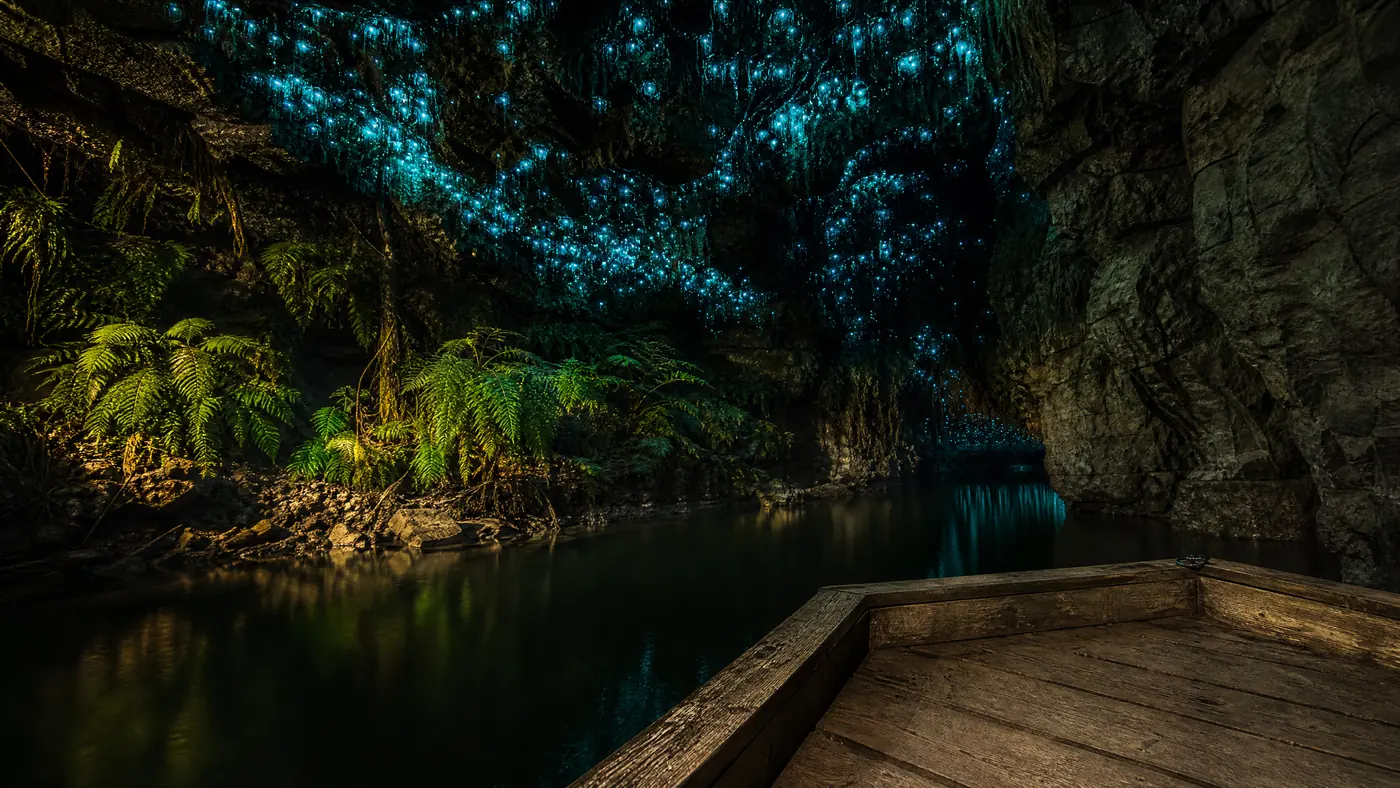
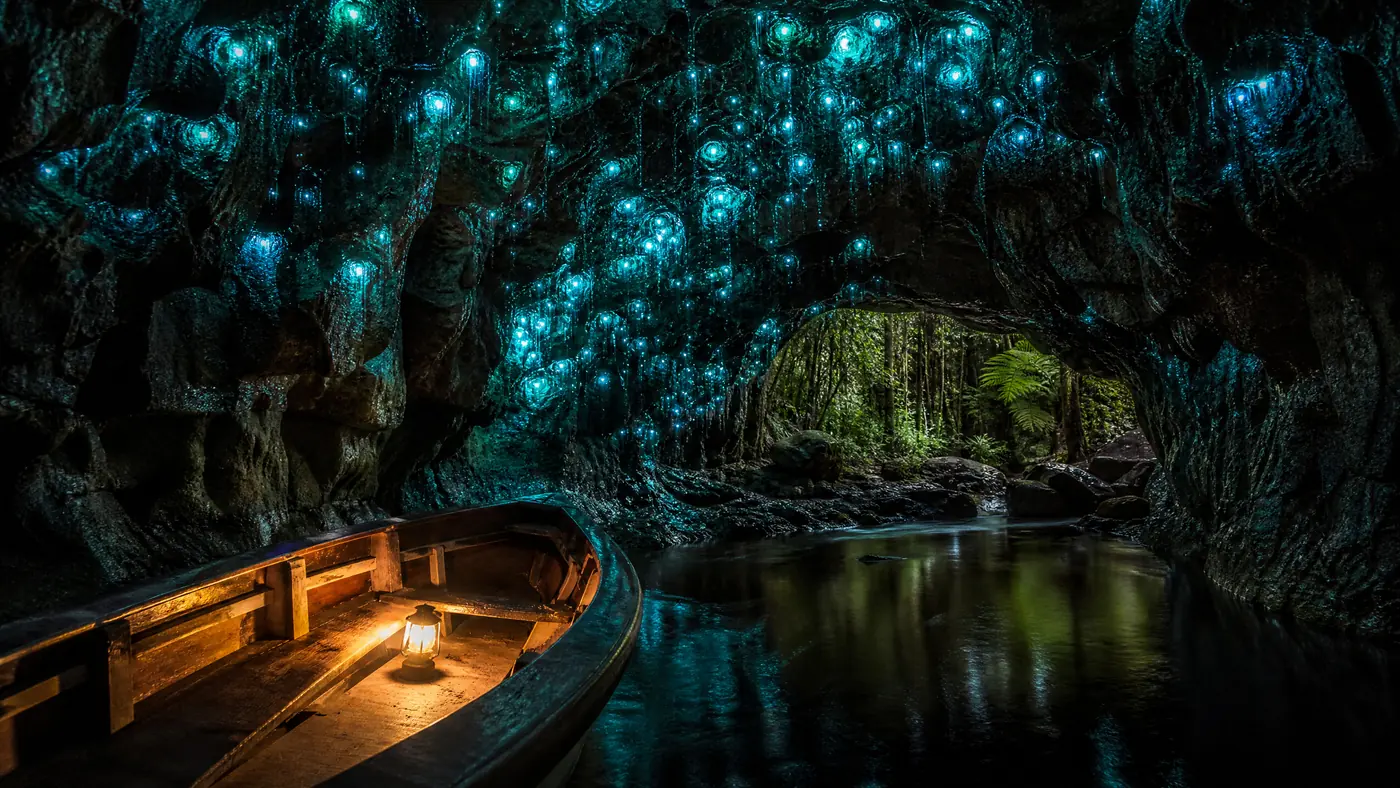
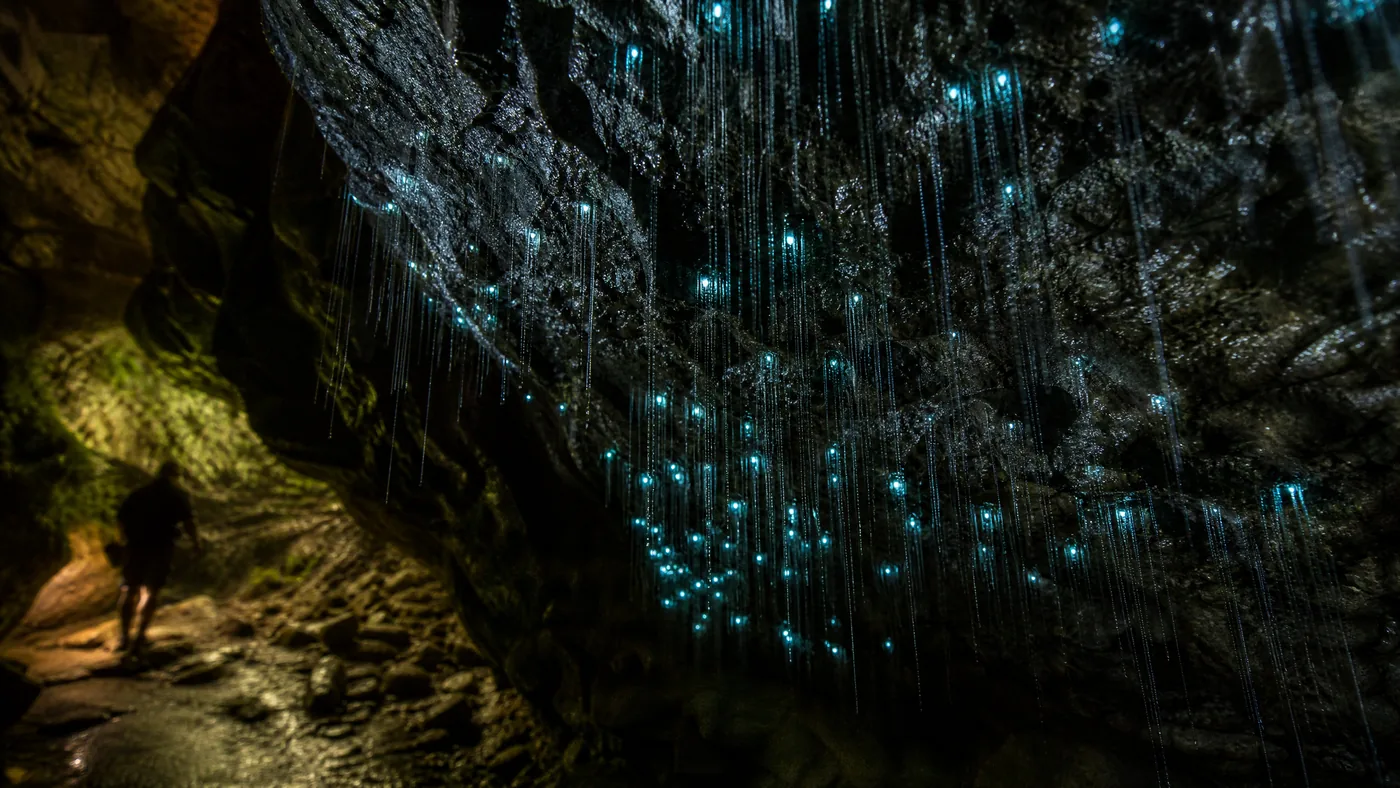
On the boat in the Glowworm Grotto the lamps fall behind you, the water goes quiet, and after a few seconds your eyes catch up. The ceiling is covered in small blue-green points of light, thousands of them, reflected in the stream below. People gasp. Then the questions start: what are they, why do they glow, are they dangerous?
This guide answers them from Wikipedia's entry on the species, Te Ara (the Encyclopedia of New Zealand), Tourism New Zealand, the Department of Conservation and the cave operators.
The quick answer
The Waitomo glowworm, Arachnocampa luminosa, is the larva of a fungus gnat found only in New Zealand; Māori call it titiwai, "lights reflected in water". It glows blue-green to lure small insects into sticky silk threads, it doesn't bite people, and in a dark cave it glows by day as well as by night. You can see glowworms for free on the Department of Conservation's Ruakuri Walk after dark, or up close on the Ruakuri Cave walk.
What are glowworms?
Not worms: the New Zealand glowworm is the larva of a fungus gnat, Arachnocampa luminosa. Only the larva glows strongly, and the species lives nowhere else on Earth.
The basics, from Wikipedia's species entry and Te Ara:
- A fly, not a worm. The adult is a small gnat, about the size of a mosquito. The glowing part of its life is the larva, which grows from 3 to 5 millimetres at hatching to 30 to 40 mm.
- Not a beetle either. When it was first recorded in 1871, in a gold mine near Thames, people took it for a relative of the European glow-worm beetle. In 1886 a Christchurch teacher showed it was the larva of a gnat.
- Two Māori names: titiwai, "lights reflected in water", and pūrātoke, from the verb "to glow".
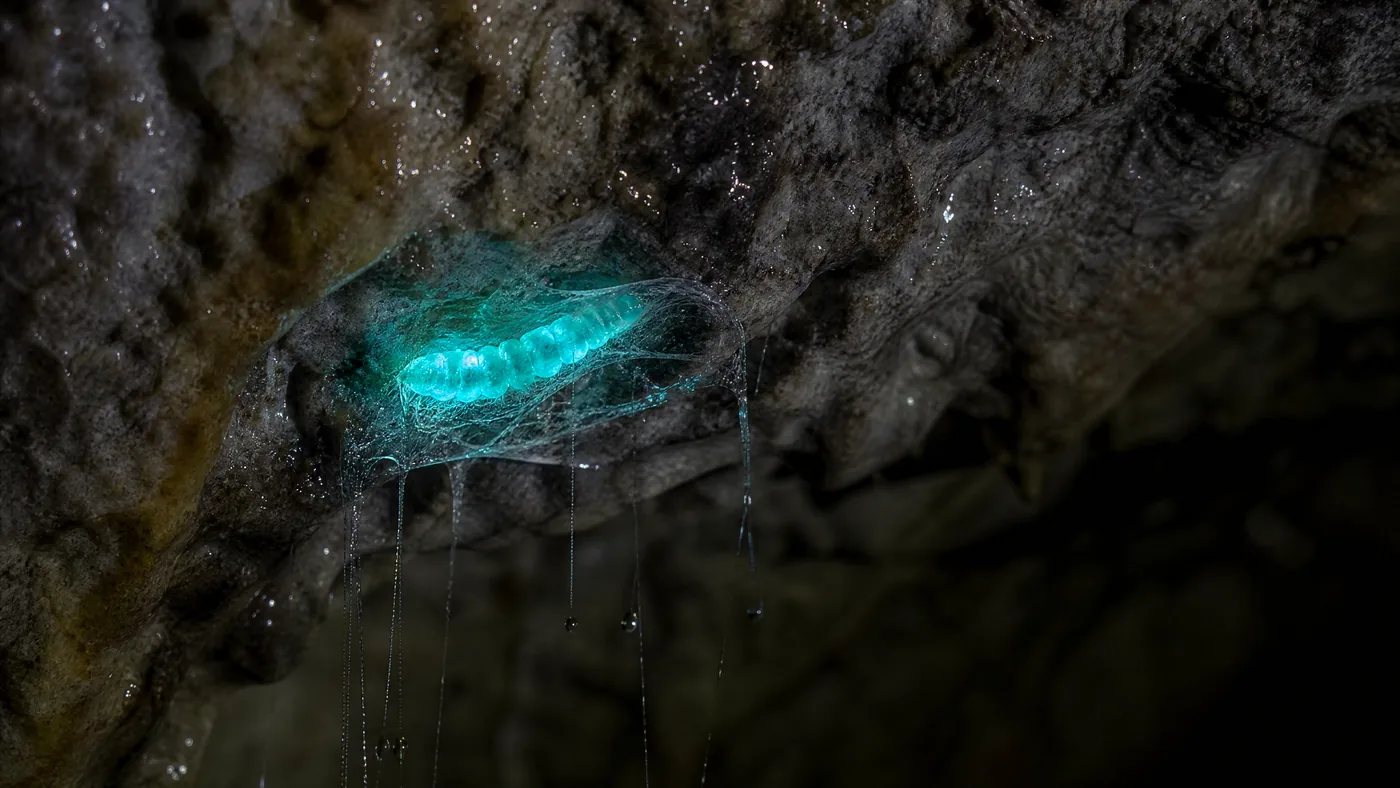
- How the light works. A chemical reaction in the larva's excretory organs, which Te Ara describes as the equivalent of a human kidney, makes a blue-green light. It uses a lot of oxygen.
- Why it glows. To fish. Each larva spins a silk nest on the ceiling and lets down up to 30 threads beaded with sticky droplets. Insects fly towards the light and get stuck. In the Waitomo Glowworm Cave the main catch is a small midge whose larvae live in the cave's stream and mud.
- How long it lasts. The larval stage can run up to a year. The pupa takes about two weeks, and the adult lives only a few days.
Why can't you touch glowworms?
Because a touch, a bright light or noise makes the larva hide and switch its light off, and its silk threads are easily wrecked. Touching anything in the caves is also off limits on every guided tour.
A glowworm's whole life depends on a quiet, damp, dark ceiling and an intact set of threads. What the sources say:
- They hide when disturbed. Tourism New Zealand notes that a disturbed glowworm's light often disappears as the larva slithers into a crevice. New Zealand Bug of the Year adds that larvae retreat and stop glowing when touched.
- Switching off is slow. Te Ara says it takes the larva several minutes to shut off its light, which is why a startled colony can look patchy for a while.
- The habitat is fragile. In 1979 the Waitomo Glowworm Cave closed from April to July after a new door let air dry out the cave and glowworm numbers fell. Today a scientific advisory group monitors carbon dioxide, temperature and humidity and decides how many visitors the cave can take each day.
The same logic sits behind the camera ban in the Glowworm Cave. Tourism New Zealand's advice for any glowworm site is short: be quiet and turn off your torch.
The classic way to meet the glowworms: a silent boat ride through the Glowworm Grotto, 45 minutes in all.
Check dates for the Glowworm Cave boat tourDo glowworms bite?
No. The larvae catch tiny insects in their sticky threads and pose no danger to people, and the adult gnats have no working mouthparts at all.
A glowworm can't reach you from a cave ceiling, and its "bite" is all aimed at midges and other small flies stuck on its threads, which it hauls up and eats. Bank-dwelling glowworms in the bush may also catch spiders and crawling insects, per Wikipedia.
The adults are harmless too. RealNZ, which runs the Te Anau glowworm caves, notes that the adult fly has no functioning mouthparts and lives only a matter of days. Wikipedia puts it at up to 76 hours for females and 96 hours for males: just long enough to mate and lay over 100 eggs.
Waitomo's real biters are above ground. The Department of Conservation recommends insect repellent for evenings in the area.
Can you see glowworms during the day?
Yes, in a cave. Te Ara and Tourism New Zealand both say cave glowworms light up at any time of day or night; outdoor glowworms start glowing shortly after dark.
Daylight never reaches the Glowworm Grotto, so for the larvae on its ceiling it is always night. That's why every cave tour shows glowworms, morning or afternoon. A few details that help with timing:
- The cave rhythm. Photo-monitoring in the Waitomo Glowworm Cave between 2009 and 2013 found the glowworms followed a 24-hour cycle and seemed to reach peak intensity in the late afternoon, per Wikipedia. An afternoon tour won't hurt.
- Hungry ones shine brighter. New Zealand Bug of the Year notes that a hungry larva glows brighter than one that has just eaten.
- Outside, wait for dark. Bush glowworms on stream banks start shortly after dark and usually shine all night, says Tourism New Zealand.
- Give your eyes time. Wherever you meet glowworms, a minute in the dark shows you far more than the first ten seconds.
Tammy, on the Glowworm Cave boat tour (October 2026): "Such a great experience seeing so many glow worms lighting up the cave. Magical!"
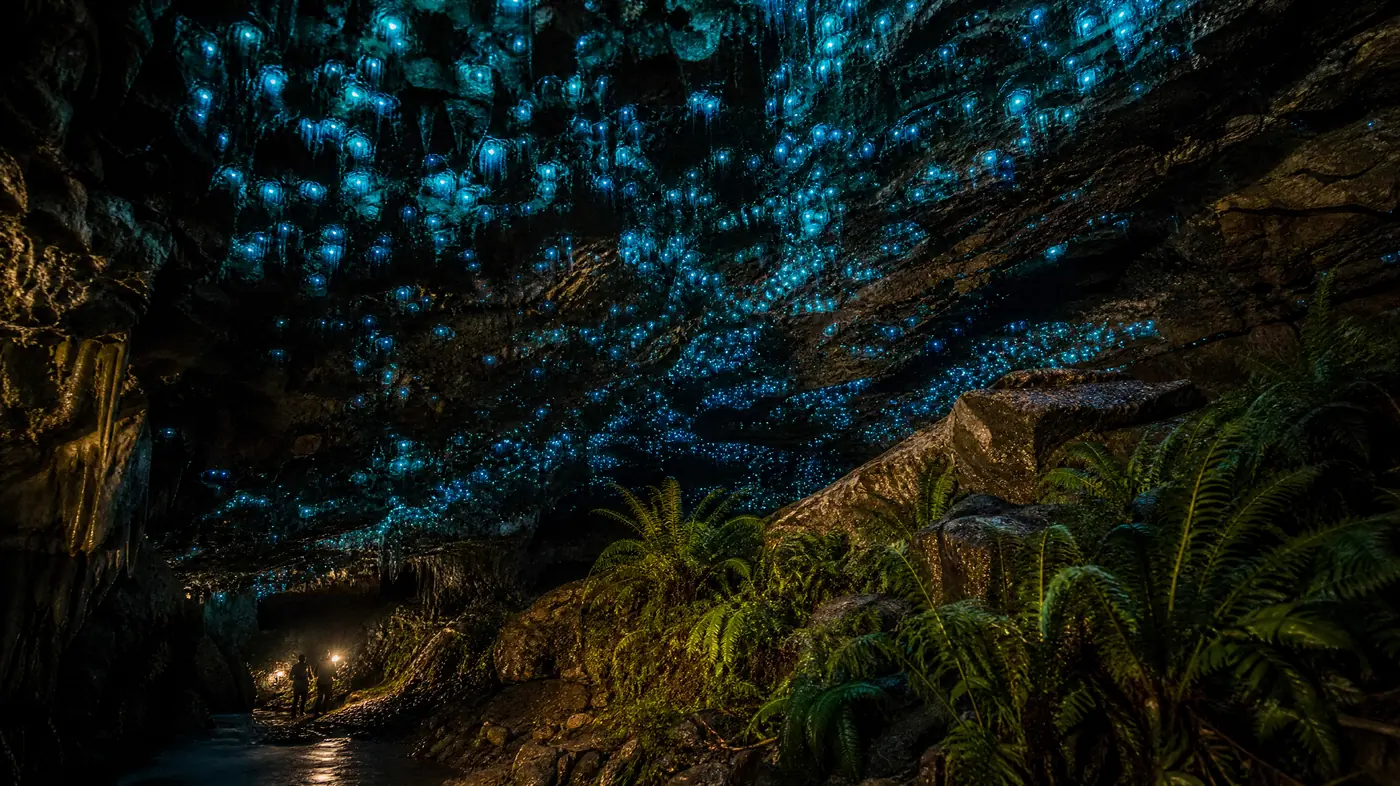
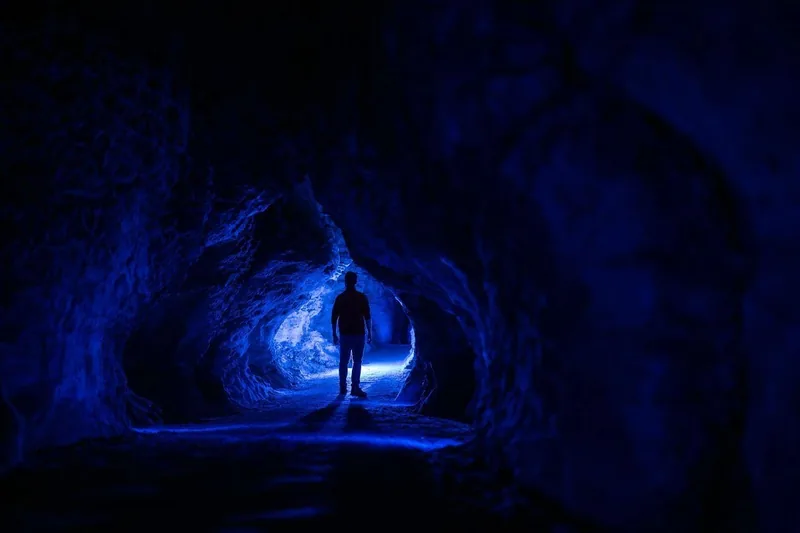
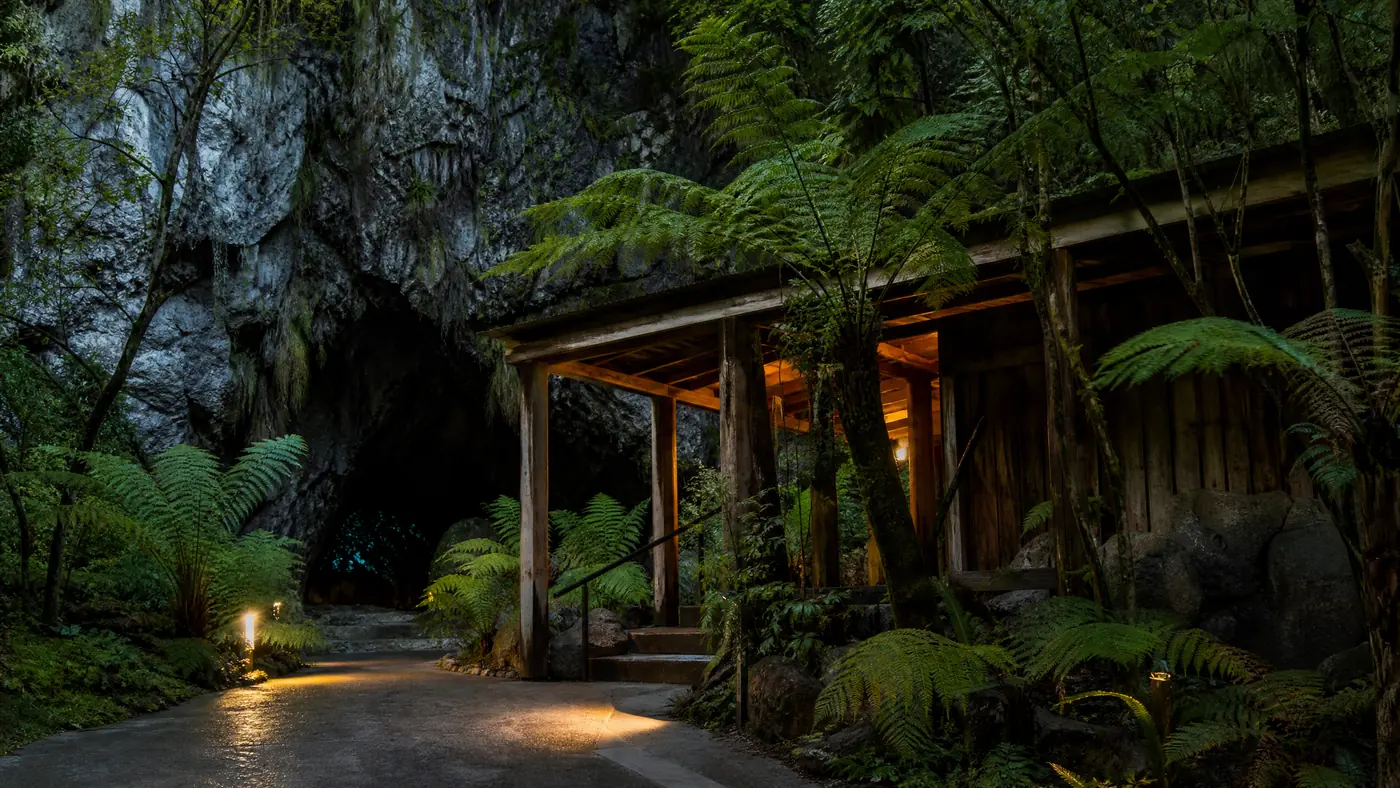
Walk down the spiral into Ruakuri Cave and see glowworms close up, with photos allowed in selected areas.
Explore the Ruakuri Cave walk Tour detailsWhat is the best time of year to see glowworms?
Any month. The caves stay at 16 to 17°C all year and glowworms show on every tour; RealNZ, the Te Anau cave operator, calls early winter (June and July) an especially active period.
No official source picks a best month for Waitomo, and the cave climate barely moves through the year. What changes is the life cycle and the crowds:
- Spring hatch. Most larvae emerge in spring, per Wikipedia, and the adults mostly appear in winter.
- Winter display. RealNZ describes the June and July display at Te Anau as bright and dense.
- Summer bookings. December to February is the busy season. Discover Waitomo says pre-booking is essential, especially over the summer months.
- Rain. The Glowworm Cave only stops for heavy rain over a long period, says Discover Waitomo. A wet day is a good cave day.
Our summer 2026 post covers this season's peak.
How rare is it to see a glowworm?
Rare worldwide, common in New Zealand. Arachnocampa luminosa lives only in New Zealand, but across both islands, in caves and damp, sheltered native bush.
Wikipedia describes the species as widespread across the North and South Islands wherever it finds darkness, shelter from air currents, high humidity and insects to eat, usually near water. Some sites became famous for it: the caves at Waitomo, Waipu, Inglewood and Te Anau.
Waitomo is the big one. In 2013 the Waitomo Glowworm Cave was described as the most visited glowworm display in the world. The Glowworm Grotto works so well because the stream feeds the glowworms' prey and keeps the air damp, and the boat lets you drift under the ceiling without a sound.
Tourism New Zealand points out that many glowworm habitats can only be reached on guided tours. For dense colonies rather than a few lights on a bank, a cave tour is the reliable way. Our cave comparison sets the options side by side.
Where can I see glowworms for free in NZ?
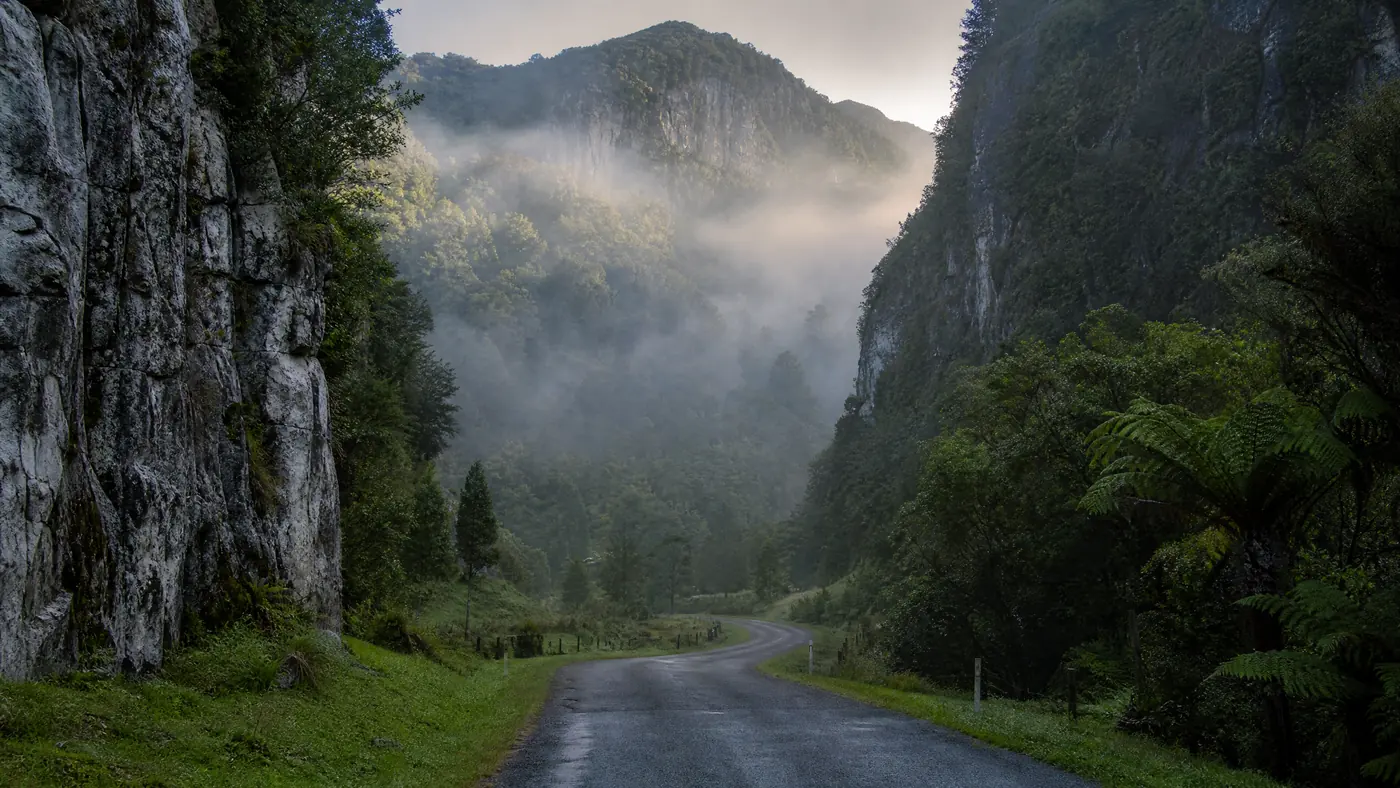
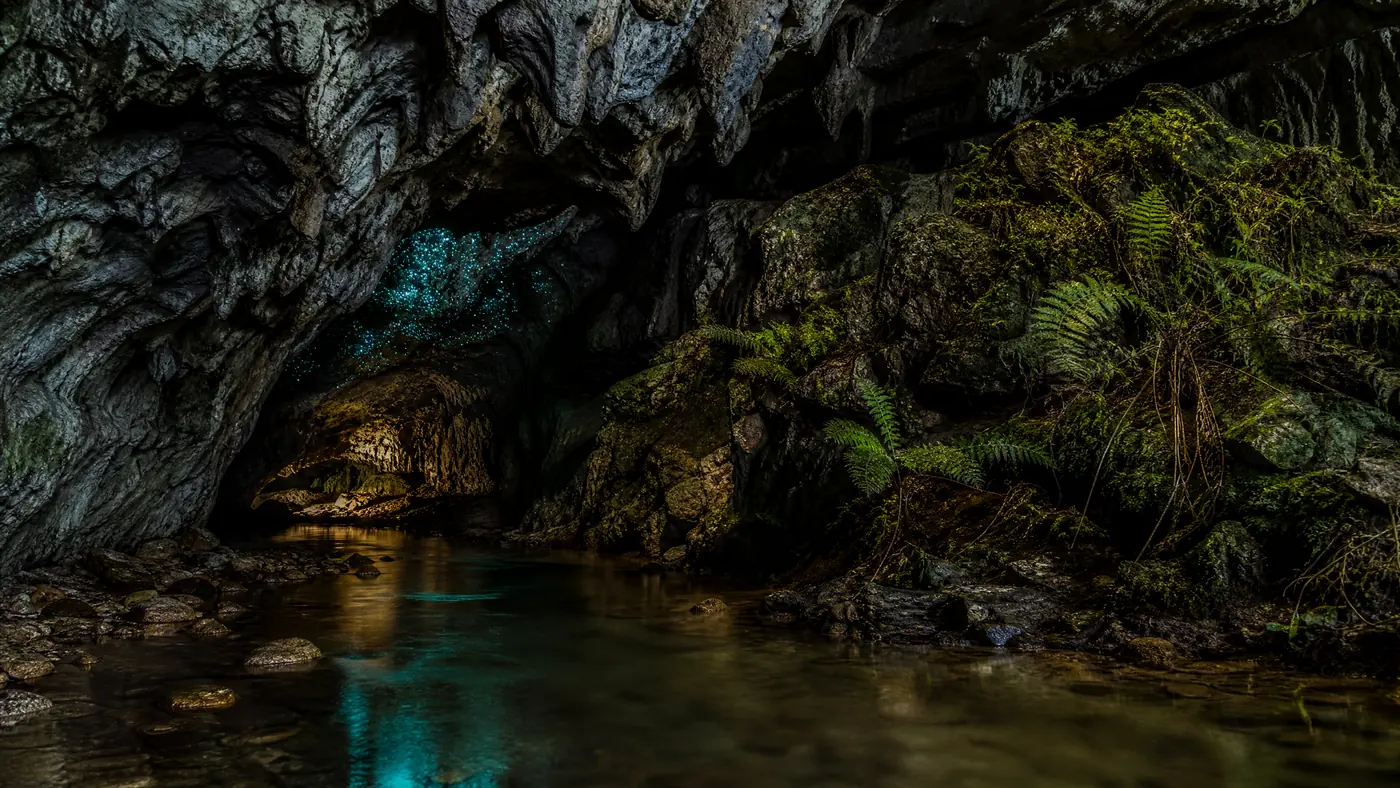
In Waitomo, on the Department of Conservation's Ruakuri Walk after dark: DOC says you can see glowworms on the track at night, best beside the main bridge. Take a torch.
What DOC lists for the Waitomo area:
- Ruakuri Walk: about 45 minutes, in the Ruakuri Scenic Reserve off Tumutumu Road, with a signposted car park. DOC grades it easiest but warns of many stairs and some steep sections, so it suits people with good mobility. Hamilton & Waikato Tourism confirms entry is free.
- Waitomo Walkway: about 1 hour 15 minutes one way, from Waitomo village to the Ruakuri Scenic Reserve, an easy grade with some short steep parts. Walk out in the late afternoon and you reach the Ruakuri Walk near dusk; carry a torch for the way back.
At the glowworms, switch the torch off or point it at the ground, keep your voice down and stay on the track. Never touch the threads.
A free walk shows a scatter of lights on the banks. The boat through the Glowworm Grotto shows a whole ceiling. Plenty of visitors do both: the tour by day, the walk after dinner.
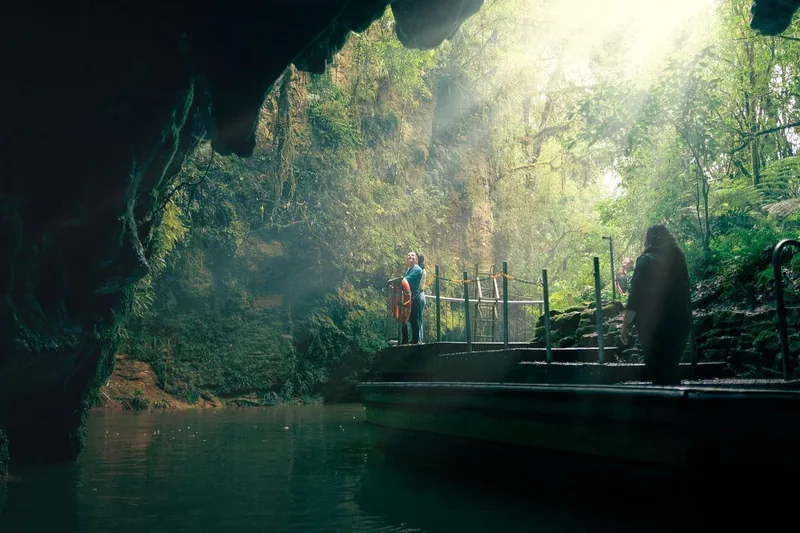
The famous ceiling: a 45-minute tour through the Cathedral, then a silent boat ride under the Glowworm Grotto.
Explore the Glowworm Cave boat tour Tour detailsWho discovered the Waitomo glowworms?
In December 1887 Tane Tinorau, a local Māori, and the English surveyor Fred Mace rafted into the Waitomo Glowworm Cave by candlelight and found the Glowworm Grotto.
The story, as Wikipedia tells it:
- 1884: Tane Tinorau, who knew the cave mouth as a good spot for catching eels, showed surveyors Laurence Cussen and Fred Mace the entrance where the Waitomo Stream goes underground.
- December 1887: Tinorau and Mace built a raft and floated in by candlelight. They came first to the Glowworm Grotto, its ceiling twinkling above them, then poled on to an embankment and found the limestone formations. Today that stream entrance is the tour's exit, by boat.
- Later: Tinorau found the upper entrance on his own, the one visitors use today.
- 1889: Tinorau and his wife Huti opened the cave to visitors and guided groups for a fee.
- 1989: the land and the cave were returned to the descendants of the original owners, including descendants of Tane Tinorau and Huti, many of whom work at the caves today.
The name Waitomo comes from the Māori wai (water) and tomo (hole or shaft). On today's tour the Cathedral, the chamber famous for its acoustics, comes just before the boat.
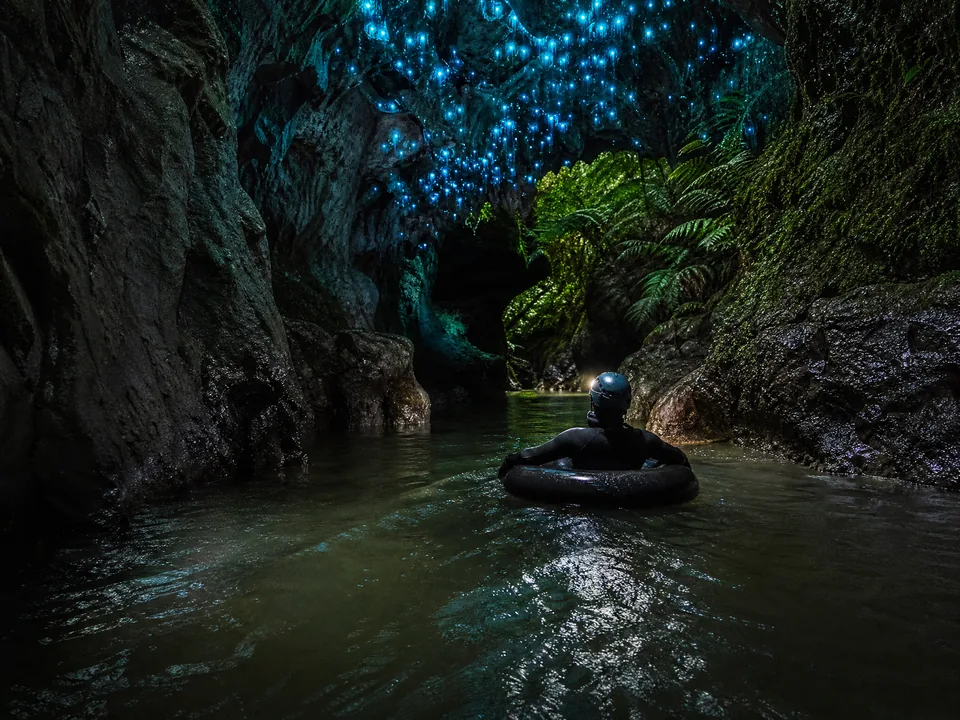
See the glowworms from an inner tube: Black Labyrinth floats you down Ruakuri Cave's underground river.
Check dates for Black LabyrinthFrequently asked questions
Are glowworms actually worms?
No. The New Zealand glowworm, Arachnocampa luminosa, is the larva of a fungus gnat, a small fly. Only the larva glows strongly.
Do glowworms glow during the day?
Yes, inside a dark cave. Te Ara and Tourism New Zealand say cave glowworms light up at any time of day or night, while glowworms in the bush start shortly after dark.
Why are photos not allowed in the Waitomo Glowworm Cave?
Discover Waitomo does not permit photography or video in the Glowworm Cave. Light disturbs glowworms, and the cave is managed closely to protect them. Photos are allowed in selected areas of Ruakuri Cave.
What does titiwai mean?
Titiwai is a Māori name for the glowworm and means "lights reflected in water", after the way their light shows on cave streams.
Ready to book
Choose your cave
Free cancellation up to 24 hours before on every option. Prices are from-prices in USD and move with the season.
Ruakuri Cave Glowworm Walking Tour
- 90-minute guided walk
- Glowworms and formations
- Entry fees
Waitomo Glowworm Caves Tour by Boat
- 45-minute guided tour
- Glowworm Grotto boat ride
- Entry ticket
Black Labyrinth Black Water Rafting
Float an underground river on a tube, under the glowworms